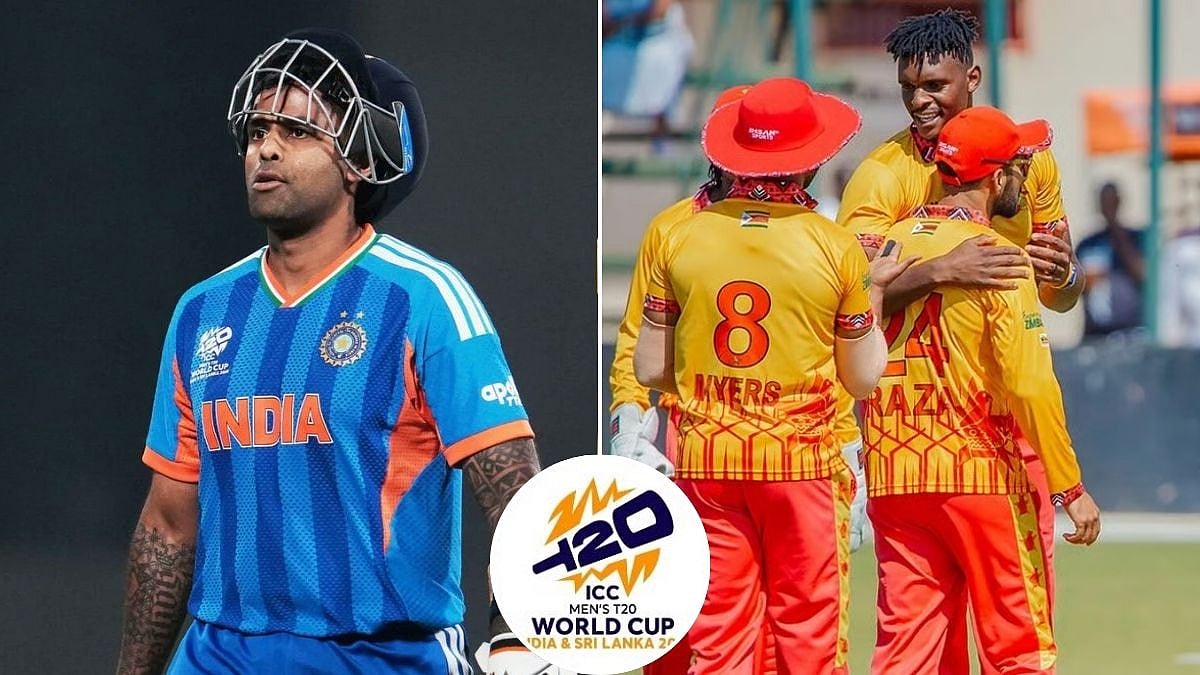
India's T20I Future Shines: Dube, Abhishek Solve All-Rounder Woes
The recent
India Zimbabwe cricket T20I series in July 2024 served as a crucial proving ground for India's next generation of cricketing stars. After a thrilling, hard-fought battle, India emerged victorious with a dominant 4-1 series win, showcasing immense talent and strategic depth. While the results themselves were impressive, particularly the splendid turnaround after losing the opening encounter in Harare, the real significance lies in the definitive emergence of solutions to long-standing team composition puzzles. Foremost among these is the seeming resolution of India's perennial search for reliable batting all-rounders, spearheaded by the electrifying performances of Shivam Dube and Abhishek Sharma. Their consistent contributions, alongside the dependable Washington Sundar, suggest that the future of India's T20I setup is brimming with versatile options, poised to tackle global challenges.
The series kicked off with a surprising jolt in the 1st T20I on July 6th, where Zimbabwe defended a modest total of 115/9, clinching a 13-run victory against an Indian side that faltered to 102 all out. This initial setback, however, proved to be a critical learning curve, igniting India's resilience. The team responded emphatically in the subsequent matches, demonstrating their pedigree. The 2nd T20I on July 7th saw India post a colossal 234/2, flattening Zimbabwe for 134, securing a massive 100-run win. The momentum continued with a 23-run victory in the 3rd T20I, where India defended 182/4. The most emphatic statement came in the 4th T20I on July 13th, as India chased Zimbabwe’s 152/7 without losing a single wicket, achieving a 10-wicket victory with 28 balls to spare. This clinical demolition, followed by a comfortable win in the final match, underscored India's adaptability and sheer firepower.
The All-Rounder Renaissance: Dube, Abhishek, and Sundar Step Up
For years, Indian cricket aficionados and selectors alike have grappled with the elusive quest for genuine batting all-rounders who can consistently contribute with both bat and ball in the demanding T20 format. The Zimbabwe tour, however, has delivered promising answers through the stellar displays of Shivam Dube, Abhishek Sharma, and the ever-reliable Washington Sundar.
*
Shivam Dube: The Power Hitter with Crucial Pace
Dube's inclusion in the squad has often been seen as an opportunity for his left-handed power-hitting capabilities. In this series, he not only showcased his ability to clear boundaries with ease but also delivered vital overs with his medium pace. His powerful striking provides India with a much-needed impetus in the middle order, capable of accelerating the scoring rate or finishing an innings strongly. His ability to chip in with a few overs, often breaking partnerships or containing runs, adds immense value, making him a true two-dimensional asset.
*
Abhishek Sharma: The Explosive Southpaw with a Golden Arm
Abhishek Sharma has been a revelation. His aggressive left-handed batting at the top or in the middle order, coupled with his crafty left-arm orthodox spin, provides a dynamic package. Sharma's fearless approach with the bat perfectly aligns with the modern T20 ethos of attacking from the outset. Furthermore, his spin bowling offers a vital dimension, capable of picking up wickets in the powerplay or stifling opposition batsmen in the middle overs. The combination of an attacking batsman and a wicket-taking spinner makes him an incredibly attractive option for team balance.
*
Washington Sundar: The Consistent All-Phase Contributor
While Dube and Abhishek represent fresh blood, Washington Sundar reaffirmed his consistent value to the team. His economical off-spin bowling, particularly effective in the powerplay, continues to be a crucial asset. What sets Sundar apart is his steady temperament and ability to contribute valuable runs down the order, often under pressure. His calm presence and multi-faceted skills ensure that India always has a reliable option, whether it's to break a partnership, keep things tight, or shore up the batting.
The emergence of these three players drastically expands India's strategic options. Having multiple players who can bat effectively and bowl useful overs allows for greater flexibility in team composition, enabling the inclusion of an extra specialist batsman or bowler without compromising the overall balance. This versatility is gold in T20 cricket, where match-ups and situational adaptability are paramount.
Gill's Leadership & India's Aggressive New Batting Blueprint
Beyond individual brilliance, the series also highlighted exceptional leadership and a clear shift in India's batting philosophy. Shubman Gill, donning the captain's armband, impressed everyone with his calm yet assertive leadership. He confidently stated that "captaincy brings out the best in me," and his performance on the field reflected this. Gill's ability to lead such a "phenomenal talented players" was evident in how the team bounced back from the opening loss, demonstrating composure and tactical acumen. His leadership during this series provides a glimpse into India's future captaincy options.
The batting approach, especially from the top, typified a new and aggressive India. Yashasvi Jaiswal, in particular, embodied this "no-holds-barred" mindset. His fearless hitting and high strike rate from the very first ball signal a departure from the "safety-first, risk-averse approach" that India sometimes adopted in the past. Jaiswal's show, combined with Gill's elegant yet effective stroke play, saw the opening pair make light work of targets, most notably in the 4th T20I where they chased down 153 without losing a single wicket. This aggressive blueprint sets the tone, creating immediate pressure on opposition bowlers and is crucial for success in modern T20 cricket. It’s an approach that ensures India maximises the powerplay and maintains momentum throughout the innings, directly addressing the need for higher strike rates across the board. For more insights into this shift, you can read about the
Aggressive New Era: Key Takeaways from India's Zimbabwe T20I Series.
Beyond the Bat: Samson, Mukesh, and Collective Bowling Power
While the spotlight often shines on batting heroics, the contributions of other key players and the collective bowling effort were equally vital to India's 4-1 triumph in the
India Zimbabwe cricket series. Sanju Samson, for instance, played a crucial role both behind the stumps and with the bat. His clean glovework and valuable contributions in the middle order showcased his importance as a reliable wicketkeeper-batsman, providing stability and timely acceleration.
In the bowling department, Mukesh Kumar stood out. His ability to bowl economically and pick up crucial wickets, especially during the death overs, proved invaluable. What was most heartening, however, was the collective strength of the bowling unit. The bowlers "shared the wickets around," ensuring that the pressure never rested solely on one or two individuals. This collective responsibility, with various bowlers stepping up at different stages, is a hallmark of a strong T20 team. It means that even if one bowler has an off day, there are ample options to pick up the slack, maintaining control and creating wicket-taking opportunities. This depth in bowling, combining pace, swing, and spin, with a mix of right-arm and left-arm options, presents a formidable challenge to any opposition.
The Road Ahead: Building on the Zimbabwe Foundation
The India vs Zimbabwe T20I series has undoubtedly laid a strong foundation for India's T20I future. The emergence of Dube and Abhishek as genuine all-round options, combined with the reaffirmation of Sundar's value, provides India with unparalleled flexibility and depth. Gill's blossoming leadership, coupled with the aggressive batting philosophy championed by Jaiswal, signals a dynamic and exciting era for Team India.
The challenge now lies in nurturing these talents and integrating them seamlessly into the broader national squad. Providing consistent opportunities, allowing them to hone their skills against diverse oppositions, and managing their workload will be crucial. This series has shown that India possesses a deep pool of talent, capable of stepping up when called upon. The performances have not only resolved immediate selection dilemmas but have also injected a fresh wave of confidence and aggression into the team's approach. As India looks ahead to future ICC tournaments and bilateral series, the lessons learned and the stars unearthed from this
India Zimbabwe cricket encounter will undoubtedly shape the strategic direction and success of
India's T20I future. The stage is set for a thrilling journey, with these young talents leading the charge.
Conclusion
The recent 4-1 T20I series victory against Zimbabwe has been more than just another win for India; it's a testament to the nation's burgeoning cricketing talent and a clear indicator of a bright future in the shortest format. The breakthrough performances of Shivam Dube and Abhishek Sharma, brilliantly complementing the consistency of Washington Sundar, have effectively addressed India's long-standing quest for versatile all-rounders. Under the astute leadership of Shubman Gill and powered by the fearless aggression of Yashasvi Jaiswal, the team has showcased a dynamic and uncompromising brand of cricket. With Sanju Samson's crucial contributions and a collective bowling effort, this series has provided definitive answers to several team composition questions. The insights gained from this crucial
India Zimbabwe cricket encounter, particularly regarding player depth and strategic shifts, unequivocally affirm that
India's T20I future is not just promising, but truly shines with myriad options and an exciting, aggressive approach.